
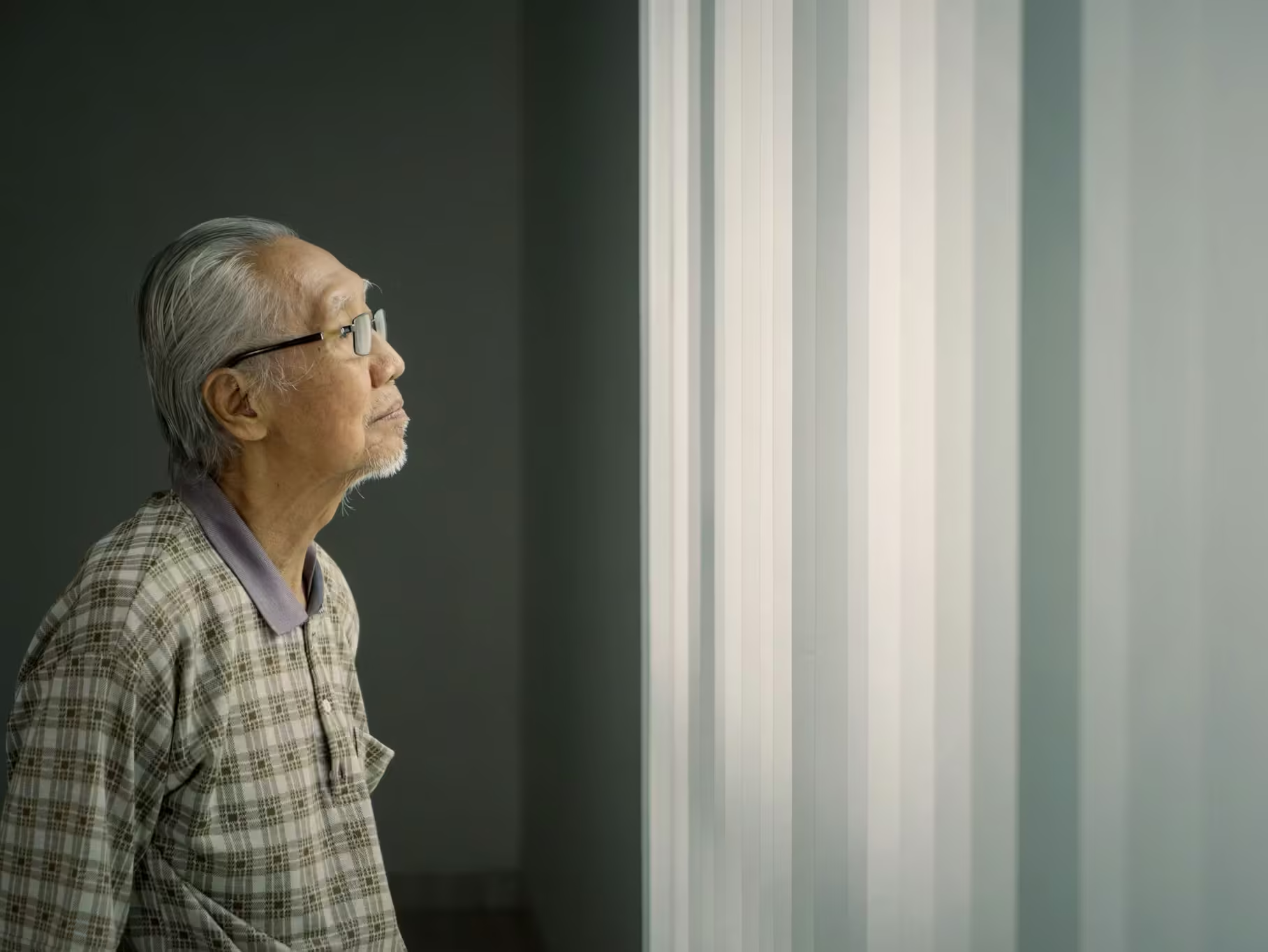
There’s a kind of grief many people experience after 60 that rarely gets named—because it doesn’t look like loss in the traditional sense.
Nothing is wrong, exactly.
Your health may be good. Your relationships intact. Your calendar lighter, even enviable. And yet, beneath the surface, there’s an ache you can’t quite explain.
It’s the grief of becoming less central in the world.
For decades, you were needed in obvious ways. Decisions flowed through you. People relied on your competence, your judgment, your presence. Your role—at work, in your family, in your community—was clear.
Then, slowly, subtly, that center of gravity begins to shift.
You’re still capable. Still wise. Still growing. But the world doesn’t ask for you in the same way.
And no one prepared you for how that would feel.
This isn’t about invisibility in the dramatic sense. It’s quieter than that. It’s noticing your opinions aren’t sought as often. That systems move on without your input. That cultural conversations feel faster, louder, less interested in depth.
You start to wonder:
- If I’m no longer needed like I once was, do I still matter in the same way?
- Where does my authority come from now?
- Who am I when I’m no longer the builder—but not finished becoming?
Most conversations about this season focus on logistics: money, health, travel, estate plans. Important topics, yes—but they skip the inner reckoning.
Because what’s really happening for many is an identity shift.
The role that once gave you structure and significance is loosening. And even when that role was heavy, even when you longed for relief, its passing deserves to be grieved.
Grief doesn’t only follow endings we didn’t choose. It also follows endings that arrive naturally, quietly, and without ceremony.
What makes this grief especially hard is that it isn’t socially rewarded to name it. You’re “supposed” to be grateful. Relaxed. Free. Content.
So instead of naming the loss, many people internalize it. They downplay their ache. They wonder if they’re being ungrateful—or worse, irrelevant.
But becoming less central does not mean becoming less valuable.
It means your contribution is changing.
This season invites a different posture—not striving, but stewarding. Not proving, but offering. Not building platforms, but lending perspective. Your wisdom may not be in demand by the culture at large, but it is still deeply needed—often in quieter, more relational ways.
The challenge is learning how to matter without measuring yourself by visibility.
That takes courage. It takes reflection. And it takes permission to grieve what was, even as you remain open to what’s becoming.
This is not the diminishing of your life. It is the deepening of it.
And grief, when honored rather than ignored, can become the doorway to a truer, freer way of being—one rooted not in relevance, but in meaning.